Factory workers in Thailand were caught on camera using their mouths to debone chicken feet. Read More
from Canoe https://ift.tt/2S8LPK2

Black Mag Would you like to share your story, your advice or your lessons in life with over 3 million monthly readers of blackmag.tk?
Friday, 31 January 2020
Netflix’s ‘The Crown’ to end after 5th season with new QEII
Netflix hit British royal drama The Crown will end after a fifth season with Imelda Staunton playing Queen Elizabeth II, according to its creator Peter Morgan. Read More
from Canoe https://ift.tt/36KrYpV
from Canoe https://ift.tt/36KrYpV
Faster, Cheaper, Power Efficient UFS Storage: UFS 3.1 Spec Published

JEDEC has published its UFS 3.1 specification (aka JESD220E), which adds several performance, power, cost-cutting, and reliability-related features to the standard. The new capabilities promise to increase real-world device performance, minimize power usage, potentially cut costs of high-capacity storage devices, and improve the user experience.
Devices compliant with the UFS 3.1 standard continue to use MIPI's M-PHY 4.1 physical layer with 8b/10b line encoding, MIPI’s UniPro 1.8 protocol-based interconnect layer (IL), and support HS-G4 (11.6 Gbps) per lane data rates. Meanwhile, the new version of the specification supports three new features: Write Booster, Deep Sleep, and Performance Throttling Notification. In addition, JEDEC published a specification for Host Performance Booster technology. All of these features are already supported by modern SSDs, so the UFS 3.1 spec and HP bring UFS storage devices closer to SSDs in terms of functionality.
As the name suggests, Write Booster is designed to increase write speeds by using a pseudo-SLC cache. A similar technology is already used with SSDs and various miniature NVMe-powered storage devices, such as those used in Apple’s iPhone/iPad. Also, caching is supported by the SD 6.0 standard to hit write performance targets.
The second important new capability of the UFS 3.1 technology is Deep Sleep, a new lower power state designed for cheap UFS devices that use the same voltage regulators for storage and other functions.
Yet another new capability is Performance Throttling Notification that enables the UFS device to inform the host about performance throttling when overheating. Ultimately, avoiding throttling means a more consistent performance.
Last but not least is Host Performance Booster, which caches the logical-to-physical (LTP) address map of a UFS device in the system’s DRAM to improve performance. Mobile applications use a lot of random read operations and therefore access LTP address maps often. Meanwhile, because storage capacity of UFS devices is growing, so is LTP size, which makes it harder (and more expensive) to keep it in a controller’s memory. By hosting LTP in fast system DRAM and delivering an LTP hint when sending an I/O request, it is possible to improve random read performance and reduce the cost of the UFS controller. Samsung worked on HPB feature several years ago and claims that it can improve random read performance by up to 67%. In SSDs, HMB capability is used to cut down costs, so HPB will prevent UFS devices from getting too expensive as their capacity increases. It is important to note though that HPB is not a mandatory, but an optional feature for now.
To sum things up, while UFS 3.1-compliant storage devices will continue to offer a theoretical maximum bandwidth of up to 23.2 Gbps (2.9 GB/s) when HS-G4 is used (given the encoding used by M-PHY 4.1, actual achievable bandwidth should be something like 1.875 GB/s). However, with Write Booster and HPB implemented, real-world performance of upcoming UFS drives will get higher and more consistent. Meanwhile, Deep Sleep will help to prolong battery life of lower cost devices.
Related Reading:
- JEDEC Publishes UFS 3.0 Spec: Up to 2.9 GB/s, Lower Voltage, New Features
- Samsung Begins Mass Production of 256 GB eUFS Devices for Automotive Applications
- Toshiba Begins to Sample UFS 3.0 Drives: 96L 3D TLC NAND, Up to 2.9 GB/s
- 512 GB of UFS 3.0 Storage: Western Digital iNAND MC EU511
- Samsung Launches Single-Chip uMCP Packages with LPDDR4X DRAM & UFS 3.0 Storage
Source: JEDEC


from AnandTech https://ift.tt/31hbLYi
Researchers create bionic jellyfish to monitor the oceans
WASHINGTON -- It may sound more like science fiction than science fact, but researchers have created bionic jellyfish by embedding microelectronics into these ubiquitous marine invertebrates with hopes to deploy them to monitor and explore the world's oceans. Read More
from Canoe https://ift.tt/2UfXysW
from Canoe https://ift.tt/2UfXysW
Airbus to pay $5.26B to settle bribery cases: Prosecutor
PARIS -- European planemaker Airbus will pay 3.592 billion euros ($5.26 billion) in global corruption fines once settlements are reached, France's financial prosecutor said on Friday. Read More
from Canoe https://ift.tt/31b63al
from Canoe https://ift.tt/31b63al
Nearly 10,000 infected with coronavirus, including 3 in Canada
A mysterious new type of coronavirus has now infected almost 10,000 people globally, including three in Canada, pushing the World Health Organization to declare the outbreak a global health emergency. Read More
from Canoe https://ift.tt/2Ocr13a
from Canoe https://ift.tt/2Ocr13a
NO KISSING, NO HUGGING: Russia’s health watchdog issues guidelines amid coronavirus fears
MOSCOW -- Russia's consumer health watchdog advised people on Friday to refrain from greeting each other with handshakes, kisses or hugs and to wear medical masks in crowded public places to try to stop China's virus outbreak spreading to Russia. Read More
from Canoe https://ift.tt/2OgKOyF
from Canoe https://ift.tt/2OgKOyF
Germany expects coronavirus vaccine within months
BERLIN -- Germany's research minister said on Friday she expected a vaccine for coronavirus to be developed within months. Read More
from Canoe https://ift.tt/3b1jdv2
from Canoe https://ift.tt/3b1jdv2
GDP up 0.1% November, offsetting most of October’s decline
OTTAWA -- Canada's economy grew 0.1% in November, driven largely by higher utility costs and mostly offsetting October's surprise decline, Statistics Canada data showed on Friday. Read More
from Canoe https://ift.tt/37LbjDZ
from Canoe https://ift.tt/37LbjDZ
Coronavirus death toll hits 213; Other countries tightening travel restrictions
SHANGHAI/BEIJING -- The United States and other countries tightened travel curbs on Friday and businesses said they were facing supply problems because of the coronavirus in China, a day after the World Health Organization declared a global health emergency. Read More
from Canoe https://ift.tt/2UfleOm
from Canoe https://ift.tt/2UfleOm
You Can Now Preorder A Lifesize & Lifelike Replica Of Baby Yoda

So many people want a lifesize replica Baby Yoda that the site taking preorders crashed almost as soon as the announcement was made.
We have really been spoiled by streaming services over the past few months. Disney+ and Netflix released the first seasons of two of the best shows we have seen in recent years. The Mandalorian and The Witcher, respectively. Both big hits and both have already announced there will be second seasons, because how could there not be?
Although The Mandalorian was named after and focused around its main character, the sidekick Mando took it upon himself to fiercely protect stole the spotlight. The Child, christened Baby Yoda by the internet due to the fact he is a young version of whatever species Yoda from the original Star Wars trilogy is.
RELATED: The Wait For Season 2 Of The Mandalorian Won't Be As Long As We Feared
Not only was The Child a shocking link to the original movies revealed at the end of the show's first episode, but he is also downright adorable. Unlike the ewoks, that were introduced just so Star Wars' creators had something cute to turn into merchandise, Baby Yoda is integral to the plot of The Mandalorian. However, since he is the cutest thing we have ever seen in a galaxy far, far away, why not churn out some merch?
It has already been revealed that Baby Yoda will be joining Build-A-Bear's ranks later this year, and we will be first in line to buy one when that happens. However, fans looking for something a little more real can now preorder a lifesize and very lifelike model of The Child from Sideshow Collectibles. So many people want one of these models that the site crashed very soon after the initial announcement was made.
At the time of typing this, the site is back up and running, so get your preorder in now if you want one of these. Although we only have a prototype to go by as of right now, it's already plain to see that the attention to detail is incredible. The model stands at 16.5 inches tall and will cost $350. However, it is a must for any Star Wars collector and let's be honest, any fan of The Mandalorian with $350 to spare.
NEXT: The Doomsday Clock Has Been Moved Closer To Midnight Than Ever Before
from TheRichest - Feed https://ift.tt/2RJio27
Super Bowl LIV Ticket Costs Have Hit An All-Time High

The Super Bowl is America's largest sporting event, and the big game carries plenty of hype every year.
But the pending showdown between the San Francisco 49ers and the Kansas City Chiefs in Miami seems to have far more hype compared to previous Super Bowl matchups. And there are plenty of reasons for that.
This game features the new face of the league in Kansas City quarterback Patrick Mahomes. He leads an offensive machine -- led by Pro Bowl tight end Travis Kelce and speedy wideout Tyreek Hill -- that will go up against one of the most dominant defensive units in history.
The big game is only three days away now, and ticket costs for Super Bowl LIV at Hard Rock Stadium have hit an all-time high.
As noted by Chris Bengel of CBS, the average Super Bowl LIV ticket price on StubHub is $6,414. As of this writing, the cheapest ticket available on the website is still a whopping $4,975. Bengel added that Super Bowl LII between the Philadelphia Eagles and the New England Patriots carried an average ticket price of $5,373, which was previously an all-time high.
SeatGeek communications manager Chris Leyden explained in an interview with Fox Business, that a ticket for the Chiefs-49ers showdown is "the most in-demand we have ever seen." As of this writing, the cheapest available Super Bowl ticket on SeatGeek is listed at $6,115.
Related: Nike Removes All Listings Of Kobe Bryant Gear In Online Store
The 49ers also have one of the biggest fanbases across the country, thanks to their dynastic run during the '80s and '90s. The team won five Super Bowls over a 14-year span between the 1981 and 1994 seasons
Sunday will mark Kansas City's first Super Bowl appearance in 50 years. They beat the heavily favored Minnesota Vikings in Super Bowl IV, and if Mahomes and company can put a halt on the surging 49ers, Kansas City will have earned its second Lombardi Trophy.
It promises to be a showdown for the ages between two of football's premier clubs.
Next: Release Date Revealed For Westworld Season 3 Along With New Trailer
from TheRichest - Feed https://ift.tt/2U8wETT
Mookie Betts Trade To Dodgers Or Padres Appear "Likely" [Rumor]

Boston Red Sox outfielder Mookie Betts has been the biggest name on the trade market this offseason, and it sounds like his tenure in Beantown could be coming to an end soon.
The Los Angeles Dodgers and San Diego Padres have been heavily involved in the Betts sweepstakes, and according to Jon Heyman of MLB Network, a trade with one of the NL West clubs "seems pretty likely at this point".
ESPN's Buster Olney also reported Thursday that the 2018 World Series champions "are deep into talks with" Los Angeles. He added that veteran pitcher David Price -- who has three years and $96 million left on his contract -- has been mentioned in some trade talks.
The Dodgers and Padres hold extremely deep farm systems which are widely considered to be in the top five. The two teams are also loaded with young stars, so L.A. and San Diego are in good position to add a player of Betts' caliber.
The Red Sox paid a luxury tax bill of $13.4 million in 2019, and ownership has continually expressed its desire to shed payroll and get under the threshold. Trading Betts -- who received $27 million in arbitration -- and Price would certainly help Boston achieve that goal.
Related: AP Study Finds That NFL Teams Lost Over $500 Million To Player Injuries This Season
Betts won the 2018 AL MVP award after guiding the Red Sox to their fourth World Series championship of the 21st century. He's among the game's most complete players, boasting phenomenal batting numbers and world-class defense in right field.
Price has completed four years of the seven-year pact worth $217 million that he signed in the 2015 offseason. Though he hasn't come close to playing at his previous All-Star form, Price was instrumental in helping the Red Sox win the 2018 World Series.
The Red Sox have consistently ran one of the highest payrolls over the past 20 years, and it's helped them win the four world championship banners. Ownership's decision to reduce payroll is surprising to many, but trading away a franchise player like Betts should cause even more to scratch their heads.
Next: Release Date Revealed For Westworld Season 3 Along With New Trailer
from TheRichest - Feed https://ift.tt/2UdM1ua
U.S. tells citizens not to travel to China as virus toll tops 200
SHANGHAI/BEIJING -- The U.S. government warned Americans not to travel to China as the death toll from a new coronavirus reached 213 on Friday and the World Health Organization (WHO) declared a global health emergency. Read More
from Canoe https://ift.tt/37K2B8P
from Canoe https://ift.tt/37K2B8P
State of emergency declared as bushfire threatens Australian capital
SYDNEY -- Australian officials declared a state of emergency for the capital city of Canberra and surrounding regions on Friday, as soaring temperatures and strong winds threatened to propel a large bushfire beyond the control of firefighters. Read More
from Canoe https://ift.tt/2S1BYWx
from Canoe https://ift.tt/2S1BYWx
U.S. confirms its first person-to-person coronavirus transmission
ATLANTA -- The husband of an Illinois woman diagnosed with coronavirus after returning from a trip to China has also become infected, marking the first known person-to-person transmission of the disease within the United States, health authorities said on Thursday. Read More
from Canoe https://ift.tt/3aZargP
from Canoe https://ift.tt/3aZargP
Western Digital and Kioxia Announce BiCS5 112-Layer 3D NAND

Western Digital and Kioxia have announced the successful development of their newest generation of 3D NAND flash memory. Their fifth-generation BiCS 3D NAND has commenced production in the form of a 512 Gbit TLC part, but will not ramp up to "meaningful commercial volumes" until the second half of the year. Other parts planned for this generation include 1Tbit TLC and 1.33 Tbit QLC dies.
The BiCS5 design uses 112 layers compared to 96 for BiCS4. BiCS5 is the second generation from WDC/Kioxia to be constructed with string stacking, and is probably built as two stacks of about 56 active layers each. Even though 112 layers is only a ~16% increase over the previous generation, the companies are claiming a density increase of up to 40% (comparing 112L 512Gb TLC against 96L 256Gb TLC, by bits per wafer), thanks to other tweaks to the design that allow for shrinking horizontal dimensions. The density of the memory array itself is said to be about 20% higher. The memory interface speed has been increased by 50%, which should put it at 1.2GT/s, on par with most of the 96L competitors.
BiCS5 parts will begin sampling this quarter. With production ramping up in the second half of the year, SSDs and other products using BICS5 will likely hit the market around the end of 2020 at the earliest. Western Digital has previously stated that they intended for the BiCS5 transition to require lower CapEx than the 64L to 96L transition, reversing the trend of steadily more expensive generational updates. This means that the migration to 112L will probably be even slower than the last transition, and 96L BiCS4 will be a major part of their production volume for quite a while.

from AnandTech https://ift.tt/2OdoG8m
Harvey Weinstein hired former Mossad agents to try and quash New York Times expose
Harvey Weinstein hired top private detectives in a desperate bid to bury the 2017 New York Times expose outing him as an alleged sexual predator, a court has heard. Read More
from Canoe https://ift.tt/2OegAfx
from Canoe https://ift.tt/2OegAfx
Nicki Minaj fulfils ‘dream’ as judge on ‘Ru Paul’s Drag Race’
Nicki Minaj drag dreams have come true - she’s joining Ru Paul’s hit show as a guest judge. Read More
from Canoe https://ift.tt/2uMPQvI
from Canoe https://ift.tt/2uMPQvI
Dodgers, Red Sox discussing Mookie Betts, David Price trade: Report
The Los Angeles Dodgers and Boston Red Sox could be nearing a trade that would send all-star outfielder Mookie Betts to the National League club, ESPN reported Thursday. Read More
from Canoe https://ift.tt/2S15JXv
from Canoe https://ift.tt/2S15JXv
BREXIT DAY: United Kingdom casts off from European Union into uncertainty
LONDON -- The United Kingdom leaves the European Union on Friday for an uncertain Brexit future, its most significant geopolitical move since the loss of empire and a blow to 70 years of efforts to forge European unity from the ruins of two world wars. Read More
from Canoe https://ift.tt/38Ubux0
from Canoe https://ift.tt/38Ubux0
Pilots, flight attendants demand flights to China stop as virus fear mount
Pilots and flight attendants are demanding airlines stop flights to China as health officials declare a global emergency over the rapidly spreading coronavirus, with American Airlines' pilots filing a lawsuit seeking an immediate halt. Read More
from Canoe https://ift.tt/2UaTSZn
from Canoe https://ift.tt/2UaTSZn
Thursday, 30 January 2020
PETA wants to replace Punxsutawney Phil with an AI groundhog
Sunday marks the return of a century-old tradition in which humans look to groundhogs to give us a six-week weather forecast. Read More
from Canoe https://ift.tt/2S8IhHY
from Canoe https://ift.tt/2S8IhHY
Earless stray cat gets ‘ear bonnet’ and forever home
An earless stray cat in Wisconsin has found a forever home. Read More
from Canoe https://ift.tt/2RDxC94
from Canoe https://ift.tt/2RDxC94
‘CORONA VIRUS BEER’? Google suggest people think coronavirus linked to Mexican beer
Can you get coronavirus from drinking Corona beer? Well, maybe if you're sharing a bottle with someone who already has the virus. But otherwise, it seems unlikely. Read More
from Canoe https://ift.tt/2tTMc3i
from Canoe https://ift.tt/2tTMc3i
The Doomsday Clock Has Been Moved Closer To Midnight Than Ever Before

The Doomsday Clock is now set at 100 seconds to midnight, the closest it has ever been to midnight in its 73-year history.
All is not well in the world. Countries are at war, and climate change is ravaging the planet. For many, the only way to avoid having some sort of nervous breakdown is to carry on as if nothing is wrong, and we totally get that. For others, burying their heads in the sand is simply not an option, and that is something they are trying to get across to everyone.
There is so much going on all at once that it can be hard for some people to comprehend exactly how much trouble the planet is in. That's one of the reasons the Bulletin of the Atomic Scientists created the Doomsday Clock shortly after the end of World War 2. It's a visual representation of how close we might be to the end of the world as we know it.
RELATED: Viral Post Claims Wombats Have Been Sharing Their Burrows During Australian Wildfires

At first, the clock was used to gauge the severity of tensions between the US and Russia. However, since 1991, the committee that determines at what time the clock is set also takes into account climate change and cyber warfare reports Business Insider. That's why last week, during the annual setting of the Doomsday Clock, the committee moved it to 100 seconds to midnight.
The closer the time is to midnight, the greater the threat of the end of the world, and 100 seconds away is the closest the clock has ever been to oblivion. The committee cites tensions between countries armed with nuclear weapons, and the lack of recognition by world leaders towards increasingly more worrying levels of climate change for the move towards midnight.
The clock was set at two minutes to midnight in 1953, 2018, and 2019, but this is the first time it has ever moved closer than that. What's even more worrying is the committee decided on when to set the time before things between the US and Iran had really even escalated. They have said what has happened since making their decision further justifies that they made the right call.
NEXT: Family Cleans House & Finds Tortoise They Lost In 1982 Alive & Well
from TheRichest - Feed https://ift.tt/2UbAThh
"We Are Completely Devastated" - Vanessa Bryant Posts First Words Since Kobe & Gianna's Death

Vanessa Bryant has broken her silence over the tragic deaths of her husband Kobe Bryant and their 13-year-old daughter, Gianna.
News of Kobe's passing sent shockwaves through the basketball community and many are still struggling to grasp the reality of it all. The five-time NBA champion was killed along with his daughter and seven others when his private helicopter crashed outside of Los Angeles on Sunday, leaving the world in absolute shock.
Gianna's 13-year-old teammates Alyssa Altobelli and Payton Chester and their parents Keri Altobelli, John Altobelli (a renowned baseball coach) and Sarah Chester were on board the aircraft when it went down. Assistant basketball coach Christina Mauser and pilot Ara Zobayan also perished in the crash.
Vanessa hadn't spoken publicly until late Wednesday night when she took to Instagram to thank persons for all of the support and prayers her family has received since Sunday.
"We are completely devastated by the sudden loss of my adoring husband, Kobe — the amazing father of our children; and my beautiful, sweet Gianna — a loving, thoughtful, and wonderful daughter, and amazing sister to Natalia, Bianka, and Capri," she wrote."We are also devastated for the families who lost their loved ones on Sunday, and we share in their grief intimately.
"There aren’t enough words to describe our pain right now. I take comfort in knowing that Kobe and Gigi both knew that they were so deeply loved. We were so incredibly blessed to have them in our lives. I wish they were here with us forever. They were our beautiful blessings taken from us too soon."
Vanessa, 37, revealed that her late husband's Mamba Sports Foundation has launched a fund to help support all of the other families impacted by Sunday's fatal incident.
"To honor our Team Mamba family, the Mamba Sports Foundation has set up the MambaOnThree Fund to help support the other families affected by this tragedy. To donate, please go to MambaOnThree.org," she added. "To further Kobe and Gianna’s legacy in youth sports, please visit MambaSportsFoundation.org."
We can't begin to imagine the pain Vanessa and her family are going through right now but TheRichest would like to wish them our sincerest condolences.
We also want to urge everyone to respect her wish for privacy as she tries to navigate through this most difficult of times with the remaining members of her family.
from TheRichest - Feed https://ift.tt/3aWHDFO
Thousands kept on board Italian cruise ship amid coronavirus scare
ROME -- Some 6,000 people are being kept on board an Italian cruise ship as tests are carried out on a passenger from Macau to see if she has coronavirus, a spokesman for the Costa Crociere cruise company said on Thursday. Read More
from Canoe https://ift.tt/38VKM7b
from Canoe https://ift.tt/38VKM7b
Tories lodge complaint over Mounties’ refusal to probe PM’s vacation on Aga Khan’s island
OTTAWA -- The federal Conservatives want the RCMP watchdog to review the police force's refusal to launch a criminal investigation into whether Prime Minister Justin Trudeau broke the law by accepting family vacations on the Aga Khan's private Caribbean island. Read More
from Canoe https://ift.tt/2Ob7FeO
from Canoe https://ift.tt/2Ob7FeO
China virus deaths rise to 170 as hit to global economy looms
BEIJING -- Hundreds of foreign evacuees from the Chinese city of Wuhan entered quarantine on Thursday as deaths from a fast-spreading virus rose to 170 and markets shuddered at the impact of an inevitable big hit to the world's No. 2 economy. Read More
from Canoe https://ift.tt/2S0ji9z
from Canoe https://ift.tt/2S0ji9z
EMERGENCY LANDING: Woman threatens to blow herself up on Russian plane
MOSCOW -- A Russian plane made an emergency landing in Moscow on Thursday after a woman passenger stood up in the aisle and threatened to blow herself up, but police later said no explosive device had been found on her, news agencies reported. Read More
from Canoe https://ift.tt/37F7WOF
from Canoe https://ift.tt/37F7WOF
Enmotus MiDrive: Rethinking SLC Caching For QLC SSDs
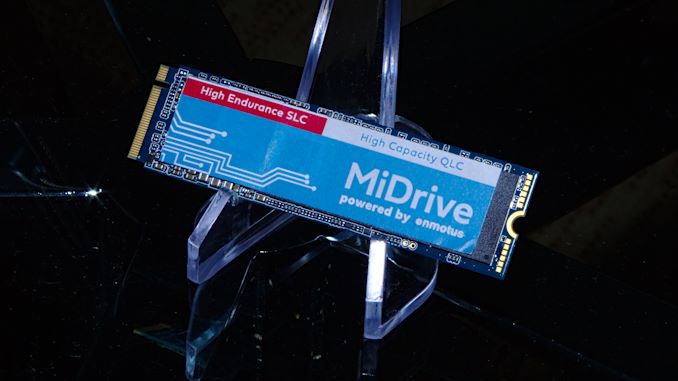
For consumer storage, CES 2020 brought a new wave of competition for PCIe 4.0 SSDs and promise of faster portable SSDs, but the most intriguing product demo was from Enmotus. They are planning a profound change to how consumer SSDs work, ditching drive-managed SLC caching in favor of host-managed tiered storage.
Enmotus is a well-established provider of storage management software. Their most familiar product to consumers is probably FuzeDrive, a limited edition of which is bundled with recent generations of AMD motherboards as AMD StoreMI. This serves as AMD's answer to Intel's Smart Response Technology (SRT) and Optane Memory storage caching systems. Enmotus also has enterprise-oriented products in the same vein. Their new MiDrive technology builds on their existing tiering software to manage a combination of SLC and QLC NAND on a single consumer SSD.
Caching and Tiering Challenges
All software-driven caching or tiering solutions tend to have limited consumer appeal due to the complexity of setting up the system. At least two physical drives are required, and the OS needs to load an extra driver to manage data placement. Any compatibility issue or other glitch can easily render a PC unbootable, and data recovery isn't as straightforward as for a single drive. These hurdles don't scare off enthusiasts and power users, but PC OEMs aren't eager to market and support these configurations. But without some form of caching or tiering, consumer SSDs would be limited to the raw performance of TLC or QLC NAND. SLC caching managed transparently by the SSD's firmware has been adopted by almost all consumer SSDs in order to improve burst performance, and it has proven to be very effective for consumer workloads. The fundamental limitation of this strategy is that the SSD must work with limited information about the nature and purpose of the user data it is reading and writing.
Most SSDs rely on fairly simple procedures for managing their SLC caches: sending all writes to the cache unless it's full, and using idle time to fold data from SLC into more compact TLC representation, freeing up cache space for future bursts of writes. There are still some choices to be made in implementing SLC caching for consumer SSDs: whether to use a fixed-size cache or dynamically sized, and whether to stall when the cache fills up or divert writes straight to TLC/QLC. As QLC drives become more common, we're also seeing drives that prefer to keep data in the SLC cache long-term until the drive starts to fill up, so that the cache can help with read performance in addition to write performance.

Enmotus FuzeDrive manual data placement controls
Host-managed caching or tiering opens the door to more intelligent management of data placement, since the host OS has better information: about which chunks of data belong to what file, and about the processes and users that interact with those files. It is easier for the host OS to accurately track the history of access patterns for hot vs. cold files. It is also possible to expose manual control of data placement directly to the user.
Two Drives In One
The Enmotus MiDrive technology allows one SSD to present the host with access to two separate pools of flash storage: QLC and SLC managed by the same SSD controller. To implement this, they have partnered with Phison to modify SSD controller firmware. For server products, a single NVMe SSD would expose two separate NVMe namespaces that Linux treats as different block devices. But for consumers, Enmotus has chosen to maximize backwards compatibility by having the MiDrive present itself as a single block device, with the first 32 or 64 GB initially mapped to SLC NAND and the rest of the drive mapped to QLC NAND. This makes it possible (and fast!) to install an OS to a MiDrive without needing any special Enmotus software or drivers. Once the Enmotus driver has been loaded, it takes over the management of data placement using vendor-specific commands that instruct the SSD to promote or demote ranges of Logical Block Addresses (LBAs) between the QLC and SLC pools of flash. (The initialization process for this tiering currently takes about a quarter of a second, because very little data needs to be moved until there's history indicating what should be in QLC vs SLC.)

Enmotus MiDrive 800GB appearing as a single device
This is a lot simpler for the host side than the strategy Intel uses for their Optane Memory H10, which is two separate PCIe devices on one M.2 card and requires special motherboard support to properly detect both halves before the caching software can even get involved. Enmotus is working to make MiDrive even simpler by having Microsoft distribute the Enmotus driver with Windows, so that a MiDrive will be automatically detected and managed by the Enmotus software without requiring any user intervention. For now, Windows will default to using its standard NVMe driver for a MiDrive, but that should change by the time products hit the shelves.
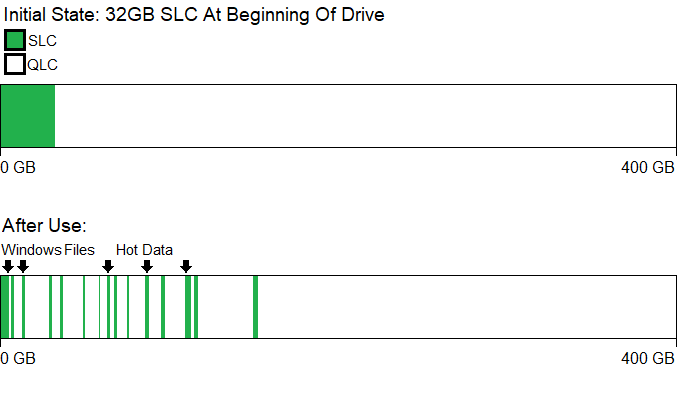
Example of how MiDrive LBA allocation will change with use
(for illustration purposes only, not based on real testing)
Enmotus supports assigning data to SLC or QLC in 4MB chunks, which is probably the size of a single NAND flash erase block in SLC mode, and thus the smallest chunk size that can easily be remapped between the QLC and SLC portions of the drive without contributing to unnecessary write amplification. That 4MB block size means that a small file moved to SLC is likely to bring along other nearby files, which will often contain related data that may also benefit from being in SLC. It also means that large files can be partially resident in SLC and partially in QLC. Since this process doesn't change the logical block addresses a file occupies, Enmotus MiDrive doesn't need to change anything about how NTFS organizes data, and it doesn't need to behave like an advanced disk defragmenter that tries to move important data toward the beginning of the disk. The MiDrive software only needs to look up what LBAs are used by a file and tell the SSD whether to move that data to SLC or QLC blocks. The only side-effect visible to the rest of the OS is a change in the performance characteristics for accessing that part of the SSD.
The SLC portion of an Enmotus MiDrive differs from a traditional SLC cache not only by being host-managed, but also in how the SSD treats it for wear leveling purposes. A typical SSD's SLC cache may have a static or dynamic size, but in either case when new write commands arrive the SSD will write the data to whatever NAND flash block is currently empty. When the cache is flushed, data from several SLC blocks will be rewritten in TLC or QLC mode to a different empty block, and the SLC blocks are then free to be erased and put back into the pool of available blocks. Managing just one pool of empty blocks means that the actual physical location of the SLC cache can move around over time, and a block that was last used as TLC might end up being used as SLC the next time data is written to it.
By contrast, Enmotus MiDrive technology has the SSD track two entirely separate pools. When the drive is manufactured, the SLC portion is permanently allocated for the lifetime of the drive. Any physical NAND pages and blocks that are used as SLC will always be treated as SLC for the lifetime of the drive, and the same for the QLC portion. The two pools of flash are subject to completely independent wear leveling, even though SLC and QLC portions will exist side by side on each physical flash chip on the drive. This means that the QLC blocks will never be subjected to the short-term Program/Erase cycles of SLC cache filling and flushing. For the SLC blocks, the error correction can be tuned specifically to SLC usage, and that allows Enmotus to achieve around 30k Program/Erase cycles for the SLC portion of the drive (based on Micron QLC NAND). MiDrives will expose separate SMART indicators for the SLC and QLC portions of the drive, so monitoring software will need to be updated to properly interpret this information.
In principle, it would be possible for either the SLC or QLC portion of the drive to be worn out prematurely, but in practice Enmotus is confident that their tiered storage management software will lead to longer overall drive lifespans than drive-managed SLC caching. Files that are known to be frequently modified will permanently reside on SLC and not be automatically flushed out to QLC during idle time. If the Enmotus software is smart enough, it will also be able to determine which files should skip the SLC and go straight to QLC until it becomes clear that a file is frequently accessed. For example, a file download coming into the machine over gigabit Ethernet will not initially need SLC performance because raw QLC can generally handle sequential writes at that speed (especially with no background SLC cache flushing to slow things down). And if that file is a movie which is infrequently accessed and only read sequentially, there's no reason for it to ever be promoted up to SLC. In general, the tiered storage management done by Enmotus should result in less data movement between SLC and QLC, rather than the increased write amplification that traditional SLC caching causes.
Since the SLC portion of an Enmotus MiDrive is a slice carved out of regular QLC NAND, it cannot offer all the benefits of specialized low-latency SLC NAND like Samsung's Z-NAND or Kioxia/Toshiba XL-Flash. The SLC portion of a MiDrive won't be appreciably faster than the SLC cache of a traditional consumer SSD, but that performance will be more consistent and predictable when working with files that are kept entirely on the SLC portion of the drive.
The Business Model
Enmotus MiDrive is currently implemented as a combination of Windows driver software and custom SSD firmware for Phison NVMe controllers, but it does not require any custom hardware. This means that any vendor currently selling Phison E12 NVMe SSDs can make a MiDrive-based product by licensing and shipping Enmotus firmware. PC OEMs can adopt MiDrives by switching to drives with Enmotus firmware and ensuring that they either include the Enmotus drivers in their Windows images, or relying on them to be distributed through Windows Update. No motherboard firmware or hardware modifications are required, or any changes to the process of provisioning a machine and preparing it for delivery to the end user. Enmotus is engaging both with PC OEMs and vendors of retail SSDs, so we can expect pre-built systems with Enmotus MiDrive technology and and upgrade options usable on any Windows 10 PC that already supports standard M.2 NVMe SSDs. Enmotus is optimistic about uptake from PC OEMs, expecting MiDrive to get a much better reception than Intel's Optane H10 did.
The basic MiDrive products will be fully automatic, with the Enmotus driver pre-installed or installed automatically when a MiDrive is detected. Data placement decisions will be completely behind-the-scenes. For enthusiasts, there will also be a premium tier similar to their current FuzeDrive software, which includes Windows Explorer shell integration so that individual files can be manually promoted or demoted, either permanently or for a limited period of time. Enmotus will also be providing a drive health monitoring tool that will include their estimate for how much extra drive lifetime has been won by using their tiering instead of ordinary SLC caching.
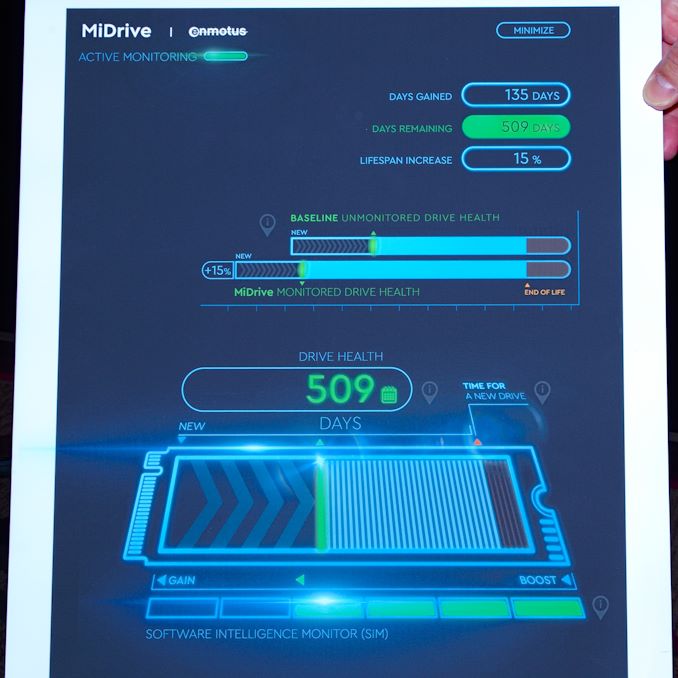
Mockup of Enmotus MiDrive SSD health monitoring tool
Enmotus expects SSDs with MiDrive technology to mostly use either 32GB or 64GB SLC portions and offer total capacities from about 400GB up to around 2TB, but the exact configurations will be determined by what their partners want to bring to market. Enmotus is also planning enthusiast-oriented solutions supporting RAID-0 style striping across multiple physical drives, and solutions for single-package BGA SSDs that go into small form factor and embedded devices.
Enmotus MiDrive technology will add to the price of SSDs, but since we're talking about QLC storage that's only relative to the cheapest NVMe SSDs available, and the final sticker prices will still be competitive for consumer SSDs. In return for that, users should get better real-world performance and enough effective write endurance to justify a 5-year warranty. We're looking forward to testing out this technology later this year, even though it will further complicate our benchmarking process. Enmotus is already sampling to interested OEMs.

from AnandTech https://ift.tt/315iZyi
Jessica Simpson ‘wanted so much’ to be with Johnny Knoxville during marriage to Nick Lachey
Jessica Simpson may deny rumours she hooked up with Johnny Knoxville while married to Nick Lachey, but in her new book exclusively obtained by RadarOnline.com before its Feb. 4 release date, the singer does admit to "wanting so bad to be with" her Dukes of Hazzard co-star. Read More
from Canoe https://ift.tt/3aWlvLE
from Canoe https://ift.tt/3aWlvLE
Jameela Jamil isn’t ‘interested in feeling beautiful’
Jameela Jamil has confessed she “doesn’t ever really feel beautiful” - and she’s not interested in starting now. Read More
from Canoe https://ift.tt/36CgxR7
from Canoe https://ift.tt/36CgxR7
Conor McGregor escapes traffic charges
UFC fighter Conor Mcgregor has dodged prosecution for motoring offences in his native Dublin, Ireland. Read More
from Canoe https://ift.tt/2GAgkTU
from Canoe https://ift.tt/2GAgkTU
Jessica Simpson’s dad offered her way out of Nick Lachey wedding
Jessica Simpson’s father was so convinced her marriage to Nick Lachey would not work out, he offered to help her escape as they walked down the aisle. Read More
from Canoe https://ift.tt/2RZEfl5
from Canoe https://ift.tt/2RZEfl5
Jason Statham and Kevin Hart in talks for ‘The Man From Toronto’
Jason Statham and Kevin Hart are set to team up for action comedy The Man From Toronto, sources tell Deadline. Read More
from Canoe https://ift.tt/3aV4jqb
from Canoe https://ift.tt/3aV4jqb
Vanessa Bryant thanks well-wishers on Instagram
Vanessa Bryant has yet to speak publicly since her husband, Kobe Bryant, and daughter Gianna were killed in a helicopter crash Sunday, but on Wednesday she thanked well-wishers in a statement on Instagram. Read More
from Canoe https://ift.tt/37EXx5M
from Canoe https://ift.tt/37EXx5M
Lab confirms B.C. case of new coronavirus, bringing total to 3 in Canada
OTTAWA -- A presumed case of the new deadly strain of coronavirus in British Columbia has been confirmed by the National Microbiology Laboratory in Winnipeg, bringing the number of confirmed cases in Canada to three. Read More
from Canoe https://ift.tt/2GDC0hK
from Canoe https://ift.tt/2GDC0hK
‘OUR ENEMY’: Iranian factory makes U.S. and Israeli flags to burn
KHOMEIN -- Business is booming at Iran's largest flag factory which makes U.S., British and Israeli flags for Iranian protesters to burn. Read More
from Canoe https://ift.tt/2GC5TiO
from Canoe https://ift.tt/2GC5TiO
AP Study Finds That NFL Teams Lost Over $500 Million To Player Injuries This Season

Injuries are part of any sport, especially in physical, full-contact sports like American Football.
Many big-named NFL players have retired early in recent years due to nagging injuries. This includes former San Francisco 49ers Pro Bowl quarterback Patrick Willis, Indianapolis Colts star quarterback Andrew Luck, New England Patriots tight end Rob Gronkowski (a shoe-in for the Hall of Fame) and Luke Kuechly -- the Carolina Panthers standout linebacker and 2013 Defensive Player of the Year.
Once again, the NFL was hit hard by injuries to key players in 2019. According to a study from the Associated Press, NFL teams wound up paying over $500 million to injured players this season.
The report paid close attention to players who started in Week 1 starters who suffered injuries and players who finished 2019 on the injured reserve. The study showed that wide receiver suffered more injuries than any other position (82), followed by cornerbacks (78) and safeties (60). Centers and quarterbacks suffered the least injuries (22 apiece).
AP's study found that the Philadelphia Eagles -- who managed to win the NFC East Division -- wound up losing "the most with millions unavailable due to games missed," with 11 players landing on the IR.
Related: Nike Removes All Listings Of Kobe Bryant Gear In Online Store
Among the highest-paid players to have missed significant time? Pittsburgh Steelers quarterback Ben Roethlisberger played two games before an elbow injury forced him to miss the final 14 games. His 2019 salary was $21 million, according to Spotrac.com.
Carolina Panthers quarterback Cam Newton ($19.1 million in salary) played in two games before a foot injury sidelined him for the remainder of the year. Jacksonville Jagaurs signal-caller Nick Foles ($15.625 million) missed significant time due to a broken clavicle, making only four starts.
Kansas City Chiefs wide receiver Tyreek Hill, who signed a $54 million extension in September, missed four games of action. Quarterback Patrick Mahomes (still on his rookie contract) was sidelined for two games with a dislocated kneecpa, but he and Hill overcame their injuries to help the Chiefs reach Super Bowl LIV.
Next: Release Date Revealed For Westworld Season 3 Along With New Trailer
from TheRichest - Feed https://ift.tt/314qjKF
‘JUST SURREAL’: Clippers’ Leonard considers not commuting by helicopter
Los Angeles Clippers star Kawhi Leonard is weighing whether to continue using helicopter commutes to get around Southern California. Read More
from Canoe https://ift.tt/2tS1gOT
from Canoe https://ift.tt/2tS1gOT
Caps’ Alex Ovechkin pays tribute to Kobe Bryant during warmups
Washington Capitals forward Alex Ovechkin honoured the late Kobe Bryant by wearing No. 24 during pregame warmups Wednesday night. Read More
from Canoe https://ift.tt/36HoNPz
from Canoe https://ift.tt/36HoNPz
Canada won’t have new coronavirus vaccine for at least one year
OTTAWA -- Canada's chief public health officer says it will likely take at least a year before a vaccine is developed to protect people against the new coronavirus that is spreading around the globe. Read More
from Canoe https://ift.tt/2Gxfw1V
from Canoe https://ift.tt/2Gxfw1V
Trump could be acquitted in impeachment trial as early as Friday: U.S. Senator
WASHINGTON -- A Democratic push to force Republicans to accept witnesses at Donald Trump's impeachment trial in the U.S. Senate appeared to be flagging on Wednesday, raising the possibility the president could be acquitted as early as Friday. Read More
from Canoe https://ift.tt/2S6BP4e
from Canoe https://ift.tt/2S6BP4e
Wednesday, 29 January 2020
‘If I listened to him we would be in World War Six’: Trump blasts Bolton as impeachment trial enters new phase
WASHINGTON -- U.S. President Donald Trump unleashed his sharpest attack yet on John Bolton after his former national security adviser depicted Trump as playing a central role in a politically motivated pressure campaign on Ukraine, as the U.S. Senate prepared on Wednesday to enter a new phase in the president's impeachment trial. Read More
from Canoe https://ift.tt/37Atr3q
from Canoe https://ift.tt/37Atr3q
Roger Federer fined $3,000 for swearing at Australian Open
Roger Federer was fined $3,000 for using an audible obscenity during his Australian Open quarterfinal victory over American Tennys Sandgren, tournament organizers said on Wednesday. Read More
from Canoe https://ift.tt/38SjEGe
from Canoe https://ift.tt/38SjEGe
Will wearing water jugs on your head combat coronavirus?
As if wearing face masks, washing your hands and using sanitizer wasn't enough. Read More
from Canoe https://ift.tt/2voGaI3
from Canoe https://ift.tt/2voGaI3
N.B. MP John Williamson considering Tory leadership
OTTAWA -- Another Conservative MP is testing the waters for a leadership bid. Read More
from Canoe https://ift.tt/2uHFQns
from Canoe https://ift.tt/2uHFQns
Cooler Master MasterAir G200P Super Low Profile RGB Cooler: 39.4mm for 95W
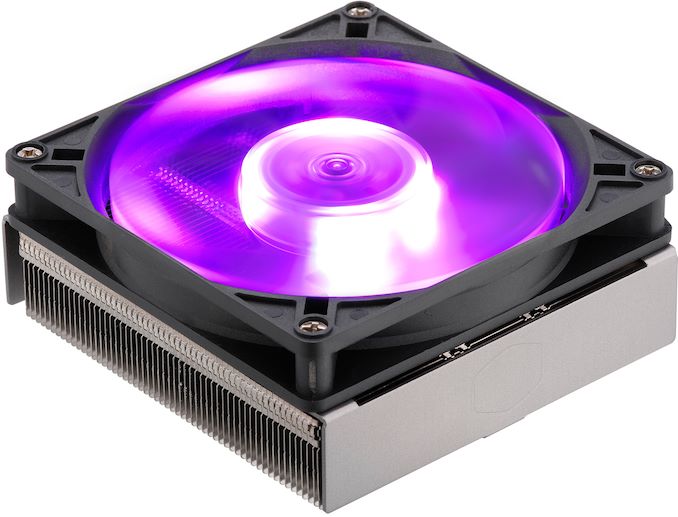
Cooler Master has introduced its new CPU cooler for small form-factor PCs. The MasterAir G200P is 39.4 mm tall, and CM claims it features an advanced heatsink, a relatively quiet fan, and addressable RGB LEDs that enable modders to build attractive compact desktops.
The MasterAir G200P measures 95×92×39.4 mm (3.7×3.6×1.6 inch) and features an aluminum base plate with over 50 fins and two C-shaped heat pipes as well as a copper base. The cooler is equipped with a 92-mm PWM fan with RGB lighting that features a rotational speed between 800 and 2,600 RPM ± 10% and can generate up to 35.5 CFM air flow and up to 26 dBA noise.
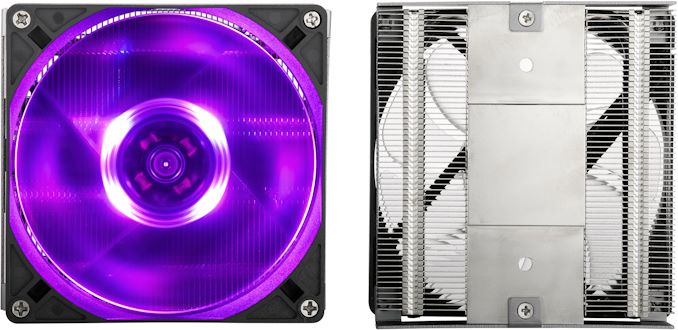
Cooler Master’s MasterAir G200P is compatible with all modern processor sockets from AMD and Intel, though the manufacturer does not disclose a 'maximum' TDP, but does rate the cooler for use with 95 W CPUs. Typically, low-profile CPU coolers that are around 30 mm tall are rated for CPUs with a 35 W ~ 65 W TDP, but the MasterAir G200P is slightly taller and has heat pipes, so the manufacturer rates it for 95 W processors.

One of the key selling points of the MasterAir G200P is its addressable RGB lighting that can be controlled using software from leading motherboards makers.
| The Cooler Master MasterAir G200P Specifications | ||||
| MAP-G2PN-126PC-R1 | ||||
| CPU TDP | 95 W | |||
| Material | Copper base, aluminum fins | |||
| Dimension with Fan | 95 mm (W) × 39.4 mm (H) × 92 mm (D) | |||
| Heat Pipes | 2 × C-shaped heat pipes | |||
| Air Pressure | ~ 2.4 mm H2O | |||
| Air Flow (CFM) | 35.5 CFM | |||
| Speed | 800 ~ 6600 ± 10% RPM | |||
| Noise | 6 ~ 28 dBA | |||
| Type of Bearing | ? | |||
| Life Expectancy | 40,000 hours at unknown temperature | |||
| Weight | ? grams | |||
| Compatibility | AMD | AM4/FM2+/FM2/FM1/AM3+/AM3/AM2+/AM2 | ||
| Intel | LGA1151/1150/1155/1156 | |||
Cooler Master’s MasterAir G200P is immediately available from leading retailers like Amazon at an MSRP of $44.99. The device is covered with a two-year limited warranty.
Related Reading
- Cryorig C7 G Is A 47mm Low-Profile Cooler with a Graphene Coating, Rated for 125W
- ID Cooling Unveils IS-30 Low-Profile 30-mm Cooler for 100 Watt CPUs
- SilverStone Launches 33mm Nitrogon NT08-115XP CPU Cooler for Ultra-Thin PCs
- 3-Way Low Profile CPU Cooling Shoot-Out: Reeven, Phanteks, & Noctua
- SilverStone Introduces VT01 Mini-STX Chassis for $35
Source: Cooler Master

from AnandTech https://ift.tt/2Ocf9yi
Is Rihanna romancing A$AP Rocky?
Rihanna is reportedly enjoying a romance with rapper A$AP Rocky, following her split with longtime beau Hassan Jameel after almost three years of dating. Read More
from Canoe https://ift.tt/312nObE
from Canoe https://ift.tt/312nObE
Both Bella Twins are pregnant
Retired WWE star Nikki Bella and twin sister Brie are both pregnant by their respective partners. Read More
from Canoe https://ift.tt/2RY1BHN
from Canoe https://ift.tt/2RY1BHN
5,974 cases of coronavirus in China; Death toll hits 132
BEIJING/SHANGHAI — The United States and Japan evacuated their nationals from a quarantined city while British Airways suspended flights to mainland China as deaths from a new virus leapt to 132 and a government economist predicted a huge hit to the economy. Read More
from Canoe https://ift.tt/2O8eGgs
from Canoe https://ift.tt/2O8eGgs
‘GREATEST FEARS’: Rick Fox’s family shaken by fake reports he was killed in chopper crash
Basketball player turned actor Rick Fox’s family were left shaken after it was reported that he’d been killed in the same helicopter crash that claimed the lives of Kobe Bryant and his daughter. Read More
from Canoe https://ift.tt/2O8r4wK
from Canoe https://ift.tt/2O8r4wK
‘THE SMELLIEST’: Model Kelly Brook ‘mortified’ after farting in front of Madonna, Gwyneth Paltrow
Actress and model Kelly Brook was left red-faced after she passed “the smelliest” wind while attending a gathering at Madonna’s home with the singer’s pal Gwyneth Paltrow. Read More
from Canoe https://ift.tt/2RXJXE2
from Canoe https://ift.tt/2RXJXE2
Beijing drugstore fined for hiking mask prices amid virus outbreak
BEIJING -- A drugstore in the Chinese capital will be fined $434,530 for hiking the price of masks by almost six times the online rate amid a spreading virus outbreak, the Beijing municipal market regulator said on Wednesday. Read More
from Canoe https://ift.tt/3100Z8A
from Canoe https://ift.tt/3100Z8A
Final moments of Kobe Bryant’s fatal helicopter crash revealed by investigators
Moments before Los Angeles basketball great Kobe Bryant, his 13-year-old daughter and the seven others perished in a helicopter crash, the pilot had tried to climb out of layer of clouds, but the aircraft then banked sharply and lurched toward the ground. Read More
from Canoe https://ift.tt/37AOkeR
from Canoe https://ift.tt/37AOkeR
Helium 10 Discount Coupon Code | 2020 Review
Helium 10 has gained popularity among the Amazon sellers and internet enthusiasts. The company is offering a good discount on its tools and packs. In this article, we will let you know all about Helium 10 discount. Along with that, we will give a brief intro about the tools that Helium offers. SB10HELIUM – 10% OFF […]
The post Helium 10 Discount Coupon Code | 2020 Review appeared first on Showbox.
source https://showbox.fun/helium-10-discount-coupon/
Airlines cut China flights as companies restrict travel on virus fears
Airlines including United Airlines Holdings Inc said they were cancelling some flights to China as demand fell sharply and global companies told their employees not to travel on deepening fears over the spread of a flu-like virus. Read More
from Canoe https://ift.tt/312D4Fl
from Canoe https://ift.tt/312D4Fl
Antonio Brown no longer under house arrest
Antonio Brown no longer has to wear a GPS ankle monitor after being freed from house arrest Tuesday by a Florida judge. Read More
from Canoe https://ift.tt/2vqmkMA
from Canoe https://ift.tt/2vqmkMA
‘WRONG BODY’: Irina Shayk says growing up she felt she ‘was supposed to be a boy’
Supermodel Irina Shayk grew up convinced she was supposed to be a boy. Read More
from Canoe https://ift.tt/2t4QzYE
from Canoe https://ift.tt/2t4QzYE
Jessica Simpson carried cup ‘filled to the rim’ with alcohol at height of addiction
Jessica Simpson carried a cup “filled to the rim” with alcohol during her lengthy battle with binge drinking. Read More
from Canoe https://ift.tt/37wLFCK
from Canoe https://ift.tt/37wLFCK
Quick Notes: Navi Refresh and RDNA2 Both In 2020, According to AMD
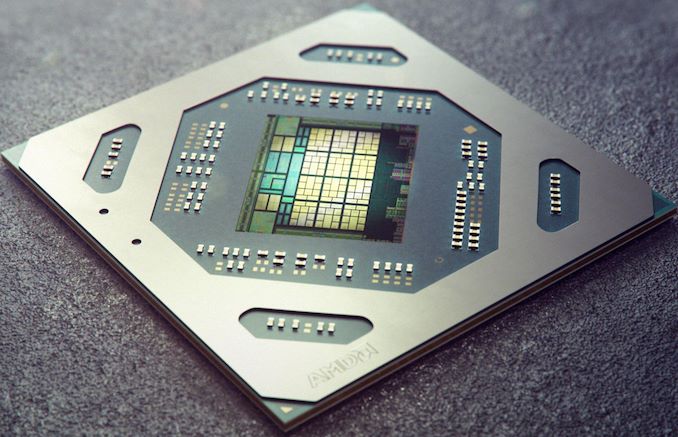
As part of today’s FY2019 earnings call, AMD CEO Dr. Lisa Su had a few words to say about AMD’s future GPU plans – an unexpected nugget of information since we weren’t expecting AMD to reveal anything further at this time.
In short, for this year AMD is planning on both Navi product refreshes as well as parts based on the forthcoming RDNA 2 GPU architecture. To quote Lisa Su:
In 2019, we launched our new architecture in GPUs, it's the RDNA architecture, and that was the Navi based products. You should expect that those will be refreshed in 2020 - and we'll have a next generation RDNA architecture that will be part of our 2020 lineup. So we're pretty excited about that, and we'll talk more about that at our financial analyst day. On the data centre GPU side, you should also expect that we'll have some new products in the second half of this year.
All told, it looks like AMD is setting themselves up for a Vega-like release process, launching new silicon to replace their oldest existing silicon, and minting new products based on existing and/or modestly revised silicon for other parts of their product stack. This would be very similar to what AMD did in 2017, where the company launched Vega at the high-end, and refreshed the rest of their lineup with the Polaris based Radeon RX 500 series.

AMD's GPU Roadmap As Of July 2019
But as always, the devil is in the details. And for that, we’ll have to stay tuned for AMD’s financial analyst day in March.

from AnandTech https://ift.tt/313Raqb
William Shatner settles divorce with fourth wife
William Shatner is single again after settling his divorce with his estranged wife, Elizabeth. Read More
from Canoe https://ift.tt/2uDTvfi
from Canoe https://ift.tt/2uDTvfi
China virus toll passes 130 as U.S. weighs flight ban
BEIJING -- The death toll from a new coronavirus in China rose sharply to 132 on Wednesday with nearly 1,500 new cases, heaping pressure on Beijing to control the disease as U.S. officials said the White House was weighing whether to suspend all flights to the country. Read More
from Canoe https://ift.tt/2uCFAX0
from Canoe https://ift.tt/2uCFAX0
U.S. says 50 troops now diagnosed with traumatic brain injury after Iran strike
WASHINGTON -- The Pentagon said on Tuesday 50 U.S. service members were now diagnosed with traumatic brain injury after missile strikes by Iran on a base in Iraq earlier this month, 16 more than the military had previously announced. Read More
from Canoe https://ift.tt/2RxTZg2
from Canoe https://ift.tt/2RxTZg2
White House holds off on suspending China-U.S. flights amid virus outbreak
WASHINGTON — The White House on Tuesday opted not to suspend flights from China to the United States as it discussed ways to deal with the coronavirus outbreak, sources briefed on the matter told Reuters. Read More
from Canoe https://ift.tt/37CdDgm
from Canoe https://ift.tt/37CdDgm
Judge signs off on Miley Cyrus, Liam Hemsworth’s divorce: Report
Miley Cyrus and Liam Hemsworth are officially single again after reportedly finalizing their divorce. Read More
from Canoe https://ift.tt/36FySgh
from Canoe https://ift.tt/36FySgh
Tuesday, 28 January 2020
Alleged ‘Penis Man’ tagger nabbed by Arizona cops
An Arizona man who allegedly left a phallic calling card has been nabbed by authorities. Read More
from Canoe https://ift.tt/2uH130I
from Canoe https://ift.tt/2uH130I
‘PENGUIN PORN’: Influencer accidentally catches birds mating while taking selfie
Steph Elswood recently took her "favourite selfie of all time" with a pair of penguins because she was too "self-absorbed" to realize until after the fact that they were having sex during the photoshoot. Read More
from Canoe https://ift.tt/2RZOwhb
from Canoe https://ift.tt/2RZOwhb
Suspected Chinese coronavirus patient gives birth to baby by cesarean
BEIJING -- Chinese doctors have safely delivered a baby boy from a Chinese woman suspected of being infected with the new coronavirus through a cesarean section in the city of Wuhan, the epicentre of the outbreak. Read More
from Canoe https://ift.tt/36zbTDx
from Canoe https://ift.tt/36zbTDx
Man in viral Easter bunny beatdown video tells cops to ‘Google’ him after arrest
The Easter bunny is famous and he wants cops in Florida to know that. Read More
from Canoe https://ift.tt/3aRBb2L
from Canoe https://ift.tt/3aRBb2L
Assassin’s Speed: Eve Technology Reveals 27-Inch QHD Monitors With 240Hz Variable Refresh

Eve Technology is known primarily for its crowd-developed 2-in-1 Eve V notebook introduced a couple of years ago. But this week the company introduced its first crowd-developed displays. The Spectrum monitors designed for gamers also happen use some of the industry’s first QHD (2560x1440) IPS panels that feature a 240 Hz refresh rate.
Eve’s Spectrum lineup of gaming displays includes three 27-inch models. The most basic model has a 2560x1440 resolution, 450 nits maximum brightness, and a 165 Hz refresh rate. The ‘fastest’ 240Hz SKU has a 2560x1440 resolution and 750 nits peak brightness. The most advanced version features a 3840x2160 resolution, 750 nits max brightness, and a 144 Hz refresh rate. All the monitors rely on an 8-bit + AFRC IPS panel from LG, which is equipped with a proprietary backlighting as well as a special polarizer that enables the LCDs to display a 98% of the DCI-P3 color gamut.
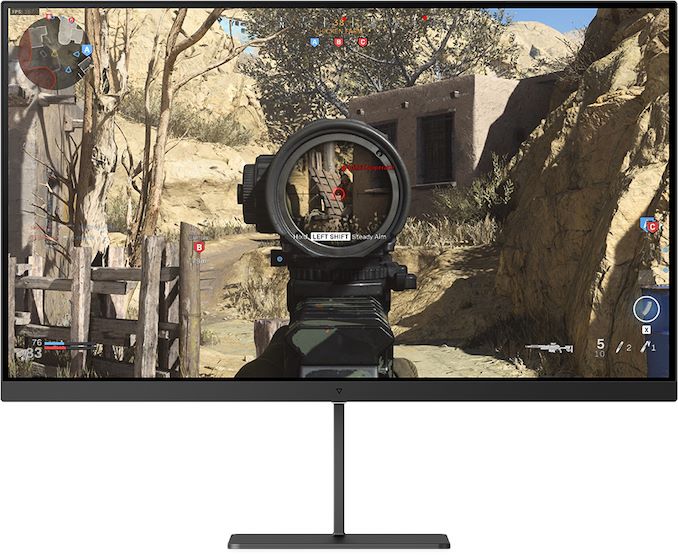
All the monitors support VESA’s Adaptive-Sync variable refresh rate technology and are AMD FreeSync Premium Pro as well as NVIDIA G-Sync Compatible certified. Also, the displays support HDR10 and are VESA DisplayHDR 400 or 600 certified, depending on the model.

Connectivity is one of the strong sides of Eve’s Spectrum monitors. All models feature one DisplayPort input and output, one HDMI input, and two USB-C inputs with one supporting a 100 W Power Delivery. In addition, the LCDs feature a triple-port USB 3.1 Gen 2 Type-A hub and a headphone jack.

It is noteworthy that while the Eve Spectrum displays are aimed at gamers, their minimalistic design does not ‘scream’ about their gaming nature. Furthermore, the monitors do not come with a stand; if you aren't bringing your own, then that will cost an additional $99.
| The Eve Spectrum Displays | ||||
| Spectrum 165 Hz 1440p | Spectrum 240 Hz 1440p | Spectrum 144 Hz 4K | ||
| Panel | 27-inch class IPS (a-Si) | 27-inch class IPS (oxide) | ||
| Native Resolution | 2560 × 1440 | 3840×2160 | ||
| Maximum Refresh Rate | 165 Hz | 240 Hz | 144 Hz | |
| Dynamic Refresh | Technology | VESA Adaptive Sync (AMD FreeSync Premium Pro & NVIDIA G-Sync Compatible Certified) |
||
| Range | 48 Hz - 165 Hz | 48 Hz - 240 Hz | 48 Hz - 144 Hz | |
| Brightness | 400 cd/m² typical 450 cd/m² peak |
650 cd/m² typical 750 cd/m² peak |
||
| Contrast | 1000:1 | |||
| Viewing Angles | 178°/178° horizontal/vertical | |||
| Response Time | 1 ms GtG | |||
| HDR | HDR10 DisplayHDR 400 |
HDR10 DisplayHDR 600 |
HDR10 DisplayHDR 600 |
|
| Pixel Pitch | 0.2334 mm² | 0.1156 mm² | ||
| Pixel Density | ~109 PPI | ~163 PPI | ||
| Color Gamut Support | 98% DCI-P3 100% sRGB |
|||
| Inputs | 1×DP 1.4 input/output 1×HDMI 2.0 2×USB-C (100W PD) |
|||
| USB Hub | Triple-port USB 3.1 Gen 2 Type-A | |||
| Audio | headphone out | |||
| Stand | Adjustable, sold separately for $99 | |||
| Warranty | ? years | |||
| MSRP | $349/€349 | $489/€489 | $589/€589 | |
Eve plans to start sales of its Spectrum displays with a QHD resolution sometimes in the third quarter. The 165 Hz model will cost $349/€349, while the 240 Hz QHD model will be priced at $489/€489. The most advanced 4K Spectrum monitor will be available in the fourth quarter for $589/€589.
It should be noted, however, that these prices are pre-order prices, and require committing to buying the hardware before it ships. Prospective buyers who want to wait for a review should expect to pay more later on, as Eve has indicated that the prices of the displays will increase by the time they hit the market.

Related Reading:
- Gone in 240 Hz: Lenovo’ Legion Y25-25 ‘Fast IPS’ Monitor w/ FreeSync at CES 2020
- Quick & Deadly: Alienware 25 (AW2521HF) 240 Hz Fast IPS Monitor Revealed
- 280 Hz Fast: ASUS Releases TUF Gaming VG279QM IPS Monitor w/ 280 Hz
- Supersonic: ViewSonic’s Elite XG270 240 Hz IPS Monitor w/ VRR & HDR
- Need for Speed: The LG UltraGear (27GN750) 240 Hz IPS Monitor with G-Sync
Source: Eve Technology

from AnandTech https://ift.tt/2RyXS4k
Jo Martin unveiled as first black Doctor Who
Batman Begins star Jo Martin has been unveiled as the first black Doctor Who. Read More
from Canoe https://ift.tt/3aPiCML
from Canoe https://ift.tt/3aPiCML
Joshua Jackson’s wife, Jodie Turner-Smith doesn’t want to raise child in America
Newlyweds Joshua Jackson and Jodie Turner-Smith are planning to leave America because they don’t want to raise their first child there. Read More
from Canoe https://ift.tt/2RZk4U2
from Canoe https://ift.tt/2RZk4U2
‘HEARTBROKEN’: LeBron James devastated over loss of ‘big bro’ Kobe Bryant
LeBron James broke his social media silence after the death of his close friend Kobe Bryant to pay an emotional tribute to the late sportsman. Read More
from Canoe https://ift.tt/36zgtBA
from Canoe https://ift.tt/36zgtBA
RCMP secrets-case arrest triggered internal warnings, advisories
OTTAWA -- After the shocking arrest of one of their own on national-secrecy charges, rank-and-file Mounties were encouraged to get counselling if needed, decline to speak with the media and avoid the headquarters venue where a news conference on the case was taking place, newly released documents show. Read More
from Canoe https://ift.tt/311sFtD
from Canoe https://ift.tt/311sFtD
China ‘confident of winning the battle’ against ‘devil’ coronovirus which has killed 106 people
BEIJING -- China's President Xi Jinping said on Tuesday was sure of defeating a "devil" coronavirus that has killed 106 people, spread across the world and rattled financial markets. Read More
from Canoe https://ift.tt/2uGRAXe
from Canoe https://ift.tt/2uGRAXe
The Science Behind Why People Have Been Dipping Their Testicles In Soy Sauce

TikTok users have been dipping their testicles in soy sauce in the hope that they might taste it, and no, you have not misread this first sentence.
It doesn't take much to start up an online trend and for it to go viral. Some of them are for a good cause, such as the ALS Ice Bucket Challenge. Thousands of people around the world had ice water poured over their heads in the name of raising money and awareness for charity.
Some viral trends aren't for quite as noble a cause. People urging each other to eat Tide pods, for example. The latest viral trend won't do as much damage to your insides as that, but we would still not recommend giving it a try. TikTok users have been dipping their testicles in soy sauce based on some science that was published seven years ago.
RELATED: TikTok Could Be Leaking Your Personal Data To China
The reason they are doing this is because the 2013 article has been misinterpreted as stating that testicles have tastebuds, reports ScienceAlert. A food and nutrition scientist from the University of Newcastle explained how the misconception has arisen. "These are not taste buds, they don't activate the gustatory cortex in the brain," explained Emma Beckett. They are taste receptors but in a lot of cases, they don't seem to serve any function at all.
"Where they are functional, they are detecting the same molecules as in the mouth, but triggering different responses," Beckett goes on to point out. Since things like bacteria have sweet structural compounds, it's likely that these rogue receptors' purpose is to detect that sort of thing. As for the ones in the testicles, well, even science isn't sure what their purpose is just yet.
One thing is for certain, they're not there so that humans can taste food with their genitals. Beckett equates dipping your testicles in soy sauce to rubbing it on the outside of your cheek. The only reason people who have done the dastardly act will have thought they might have tasted soy sauce is because they would have been able to smell it. So you can stop doing it now, guys. Please, stop it.
NEXT: How To Properly Leave Your Hotel Room, According To Experts
from TheRichest - Feed https://ift.tt/3aOvC5u
Japan to send charter flight to Wuhan to bring citizens home as virus spreads
TOKYO — Japan's government will send a chartered flight to Wuhan, the epicentre of a virus outbreak in China, on Tuesday night to evacuate its nationals wishing to return home. Read More
from Canoe https://ift.tt/37BRm2c
from Canoe https://ift.tt/37BRm2c
China virus death toll passes 100 as U.S., Canada issue travel warning
SHANGHAI -- The United States warned against travel to China on Monday and Canada issued a more narrow travel warning as the death toll from the spreading coronavirus passed 100, with tens of millions stranded during the biggest holiday of the year and global markets rattled. Read More
from Canoe https://ift.tt/2RSME9W
from Canoe https://ift.tt/2RSME9W
Ice Cube texted pal Kobe Bryant as helicopter crash news broke
Los Angeles Lakers superfan Ice Cube was so shaken by the news of Kobe Bryant’s death he texted the basketball great, hoping he’d reply. Read More
from Canoe https://ift.tt/2vsw9K6
from Canoe https://ift.tt/2vsw9K6
David Schwimmer defends ‘Friends’ following allegations of sexism and homophobia
David Schwimmer is standing up for his hit series Friends, following accusations the iconic series promoted sexist, homophobic and transphobic views. Read More
from Canoe https://ift.tt/2vnmCDT
from Canoe https://ift.tt/2vnmCDT
Stephen King backpedals over controversial diversity comments
Horror author Stephen King is clarifying comments he made about the lack of Oscars diversity in a new essay, during which he admits he “stepped over the line.” Read More
from Canoe https://ift.tt/2RVzby4
from Canoe https://ift.tt/2RVzby4
Germany identifies first case of deadly coronavirus
Germany has declared its first confirmed case of the deadly coronavirus that broke out in China. Read More
from Canoe https://ift.tt/2RyOuNW
from Canoe https://ift.tt/2RyOuNW